One of the most common operational tensions in Malaysian hospitality is hiding in plain sight: the same kitchen team that prepares guest food is also responsible for staff meals. On paper this looks efficient. In practice, it creates operational friction that quietly affects both guest experience and staff satisfaction.
Over the past several years, more Malaysian hotels, resorts and theme parks have moved to separating the two operations: outsourcing staff dining to a specialist operator while freeing their guest F&B team to focus entirely on guest experience. The results are consistent: better guest food quality, higher staff satisfaction, reduced operational cost, and stronger audit compliance.
This article walks through why integrated hotel kitchens struggle with dual responsibilities, what separation actually looks like operationally, and how hospitality operators should evaluate this decision.
Why Integrated Kitchens Struggle
A hospitality kitchen running both guest and staff meals faces several predictable tensions:
1. Operational Overlap at Peak Hours
Guest meal preparation hits peak intensity at breakfast (6-10 AM), lunch (12-2 PM) and dinner (6-10 PM). Staff meal demand hits exactly the same windows. The same chefs, the same equipment, the same prep space are being pulled in two directions simultaneously.
Something has to give. Usually, it is the staff meal. Senior chefs prioritise guest plates; junior cooks handle the staff buffet. Staff food quality is systematically second-class.
2. Cost Fluctuation and Hidden Consumption
When guest and staff ingredients are procured through the same supply chain, tracking becomes murky. Staff meals consume guest-grade ingredients without transparent accounting. Food cost per staff meal is not clearly measurable, which means cost control is guesswork.
Over a year, this can translate into significantly higher food costs than if staff meals were procured separately with targeted pricing.
3. Menu Monotony for Staff
Staff menus in integrated kitchens are often leftover-driven: what the guest kitchen has surplus of today is what staff eat. Over time this creates menu fatigue, particularly for staff who eat at the property daily over months and years.
4. Compliance Complexity
Guest F&B and staff F&B have different compliance profiles:
- Guest F&B operations are audited by brand standards (Marriott, Hilton, Accor, etc.) and by star-rating bodies
- Staff F&B is audited by HR, Malaysian labour standards, and increasingly by customer CSR frameworks if the property serves MNC events
Managing both compliance frameworks from one kitchen is possible but complex. Specialists in each are typically simpler and more reliable.
5. Guest Food Quality Occasionally Suffers
When kitchen capacity is stretched during peak moments, the staff meal demand occasionally compromises guest food quality. A rushed plating on the guest side is traceable back to capacity constraints from the staff meal window, an invisible tax on guest experience.
6. Staff Satisfaction Erosion
Hospitality staff are keenly aware that they are eating what the kitchen could spare. Over time, this awareness affects morale. Staff meals signal how much the property values its own workforce, and leftover-driven meals signal very little.
What Separation Actually Looks Like
Separating guest and staff food operations is not about building two kitchens. In Malaysian hospitality practice, it usually means:
Dedicated hotel staff dining operation run by a specialist food service operator: their own team, their own supply chain, their own menu, their own compliance documentation.
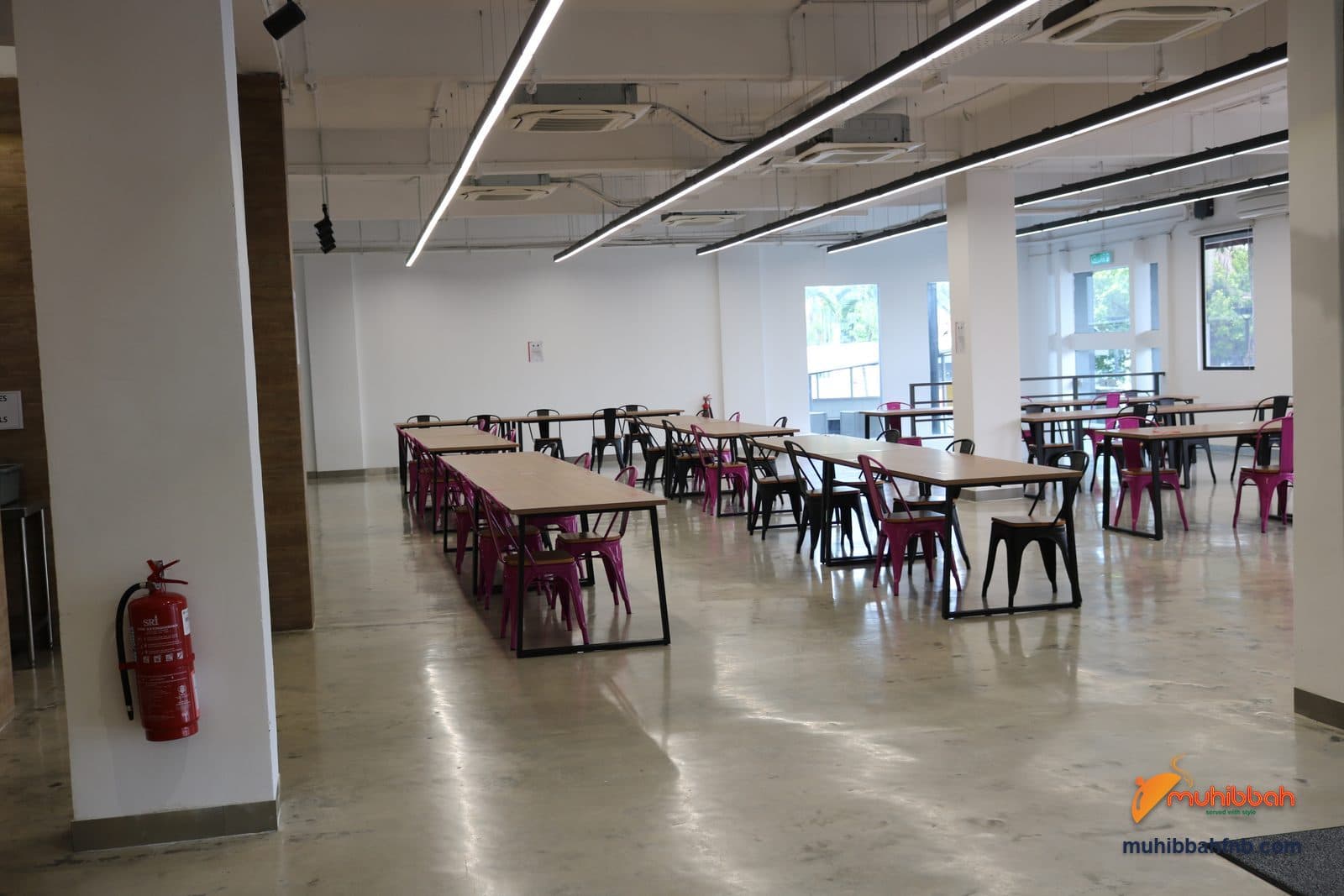
Physical separation where possible: a dedicated staff cafeteria space, separate from the guest F&B areas. This is often easier than expected; many properties already have back-of-house areas that can be converted.
Independent operational management: the staff cafeteria operator reports to HR, not to the F&B director. This removes the inherent conflict where F&B priorities override staff meal priorities.
Fixed-cost commercial structure: the property pays a monthly fee; the operator handles everything within that fee including procurement, staffing, equipment, compliance.
Guest F&B team freed to focus on guests. The hotel's own kitchen and F&B team returns to single-purpose focus: guest experience.
Why Malaysian Hospitality Is Moving This Way
Several factors are driving the shift:
Labour cost pressure. Hospitality kitchen staff in Malaysia are increasingly expensive to recruit and retain. Using senior hospitality-trained chefs to plate staff meals is poor cost discipline.
Guest expectation inflation. Guests expect progressively higher F&B quality. This requires the guest F&B team's full focus.
Compliance complexity growth. CSR audits, halal verification for MNC events, food safety regulation: the compliance burden keeps growing. Separating operations simplifies each.
Specialist operators maturing. Malaysian food service operators capable of running hospitality staff dining specifically (not just generic catering) have become more capable in recent years.
Cost transparency demand. CFOs increasingly want line-item visibility into food service cost. Integrated kitchens make this hard; separated operations make it simple.
What to Look for in a Specialist Hospitality Staff Dining Operator
Not all food service operators are equipped for hospitality-specific staff dining. When evaluating, look for:
Experience With Hospitality Workforce Dynamics
Hotels, resorts and theme parks have specific workforce characteristics:
- Shift patterns covering 24 hours
- Mix of management, culinary, housekeeping, engineering, security staff with different eating windows
- High staff density at specific moments (shift changeovers)
- Cultural diversity (local Malaysian Muslims, Chinese, Indians, foreign workers)
Operators with hospitality-specific experience understand these patterns. Generic cafeteria operators may not.
Multi-Meal Service Capability
Hospitality operations run 24/7. Staff dining must support:
- Breakfast (5:30-9:00 AM) for morning shift arrivals and overnight shift departures
- Lunch (11:30 AM-1:30 PM) for day-shift workforce
- Dinner (5:30-7:30 PM) for shift changeover
- Supper (10:00 PM-1:00 AM) for late and night shifts
Not every operator can deliver four-meal service with consistent quality.
Menu Design for Hospitality Workforce Cultural Mix
Hospitality staff in Malaysia are typically 60-80% Malaysian (mix of Malay, Chinese, Indian), 15-25% foreign workers. Menu rotation must reflect this:
- Multi-cuisine variety (Malay, Chinese, Indian, Western)
- Vegetarian and vegan options
- Festive programming across all major religious and cultural calendars
- Home-cuisine familiarity for foreign workers
Physical Kitchen Setup Capability
If your property's existing back-of-house staff dining space is inadequate, the operator should be capable of:
- Kitchen layout redesign
- Equipment procurement and installation
- Commissioning within a reasonable timeframe (typically 1-2 weeks for fit-out)
- Ongoing equipment maintenance as part of the contract
Fixed Monthly Cost Model
For CFO visibility and budget predictability, the operator should offer:
- Fixed monthly fee based on staff headcount
- Clear scope of inclusion (ingredients, staffing, utilities, maintenance, compliance, reporting)
- Transparent mechanism for headcount adjustments
- No per-event or per-meal add-ons
Compliance Discipline
For hospitality operations serving MNC guests or international events:
- Current JAKIM halal certification
- HACCP-trained kitchen staff
- Food handler certifications
- Pest control documented on a monthly schedule
- Public liability insurance (typically RM 1 million+ coverage)
Clear Operational Reporting
Monthly reports should include:
- Meals served by meal period
- Staff satisfaction feedback summary
- Compliance status (certifications, audits, incidents)
- Menu programming for the coming month
- Any operational recommendations
Common Concerns About Separation
Hospitality leaders evaluating separation often raise specific concerns. Here are the most common, and how they typically play out:
"Won't this increase our total cost?"
Usually not. When the real cost of integrated operation is tallied (senior chef time on staff meals, unclear food cost per staff meal, compliance overhead, management distraction), the fixed monthly fee of a specialist operator typically delivers equal or better total cost with dramatically better transparency.
"Won't staff notice a drop in quality?"
The opposite tends to happen. Specialist operators design staff meals as their core product. Menu variety, consistency and cultural programming typically improve compared to leftover-driven integrated operations.
"What about our existing kitchen staff?"
Several patterns:
- Some properties redeploy staff currently on staff meals to guest F&B roles (where they are more productively utilised)
- Some operators absorb existing staff into their own team during transition (with continuity of employment)
- Some staff leave naturally through normal attrition
Whatever pattern fits the property, a professional transition should handle this thoughtfully.
"Will our F&B Director resist?"
Often yes, initially. F&B Directors instinctively want control over all food on property. The conversation that usually resolves this: the separation actually frees the F&B Director to focus entirely on guest experience, the work they were hired for. Most F&B Directors come to see the separation as a benefit rather than a loss of scope.
"What if the specialist fails?"
Mitigations:
- Carefully evaluate the operator's track record (years, client retention, named references)
- Structure the contract with clear performance KPIs
- Maintain a modest transition path in case of issues
- Ensure insurance coverage is explicit in the contract
Well-established specialists with multi-year track records rarely fail. Newer operators carry more risk.
The Business Case
For most hospitality operators with 500+ staff, the business case for separation includes:
Cost predictability: Fixed monthly fee replaces hidden and variable integrated costs.
Guest F&B quality improvement: Kitchen capacity and senior chef attention return to guests.
Staff satisfaction improvement: Dedicated menu design with cultural programming improves the daily meal experience.
Compliance simplification: Specialist operator maintains staff meal compliance continuously; guest F&B team maintains guest compliance continuously.
Management bandwidth recovery: HR and F&B teams stop mediating between guest and staff food priorities.
CSR and audit readiness: Staff dining documentation is ready for CSR audits without scrambling.
Conclusion
Integrated hotel kitchens running both guest and staff meals is a model that evolved historically when specialist staff dining operators did not exist in Malaysia. That has changed.
Today, hospitality operators serving 500+ staff have a better option: engage a specialist operator for staff dining, free the guest F&B team to focus entirely on guest experience, and gain fixed-cost visibility and compliance simplification in the process.
Muhibbah F&B operates hospitality staff dining for hotels, resorts and theme parks across Malaysia, including long-running partnerships in Klang Valley and Selangor. If you are evaluating separation of guest and staff F&B operations, contact us for an operational assessment, or request a proposal tailored to your property.