Most food service companies in Malaysia will happily cater anything you throw at them: weddings, birthdays, corporate dinners, factory canteens, wedding receptions, Hari Raya open houses. The sales pitch is always the same: "We do everything."
We do not.
Muhibbah F&B only serves business clients: corporate cafeterias, industrial canteens, daily corporate catering and corporate events. We have never catered a wedding. We have never catered a birthday party. We have never run a buffet at a family event. And we have no intention of starting.
This is a deliberate choice. Here is why it matters, and why it is your benefit, not our limitation.
The Problem with "We Do Everything" Caterers
Food service looks like one industry on the surface. It is not. Under the surface, there are fundamentally different operational disciplines:
Event catering is project-based. A wedding is a one-time, high-intensity operation that must be perfect on a single day. Staff are mobilised for 12-18 hours, then released. Menu planning is bespoke. Margins are earned through volume and visual impact.
Corporate daily catering is operational. It runs every working day for years. Staff live at the site. The menu must hold interest across 30-day rotations without repeating. Margins are earned through consistency, efficiency and long-term client retention.
These are not similar. They are opposite disciplines.
When a company claims to do both, one of two things is true: either they are genuinely resourced for both (rare, and expensive to sustain), or one of the two is getting second-class attention.
In practice, we see the second scenario far more often. Caterers that also run cafeterias typically prioritise events: the margins are higher and the work feels more glamorous. The daily cafeteria operation becomes the background job that runs on autopilot with junior staff while the senior team chases the next wedding booking.
What Specialisation Actually Means
When we say we specialise, we mean something specific:
-
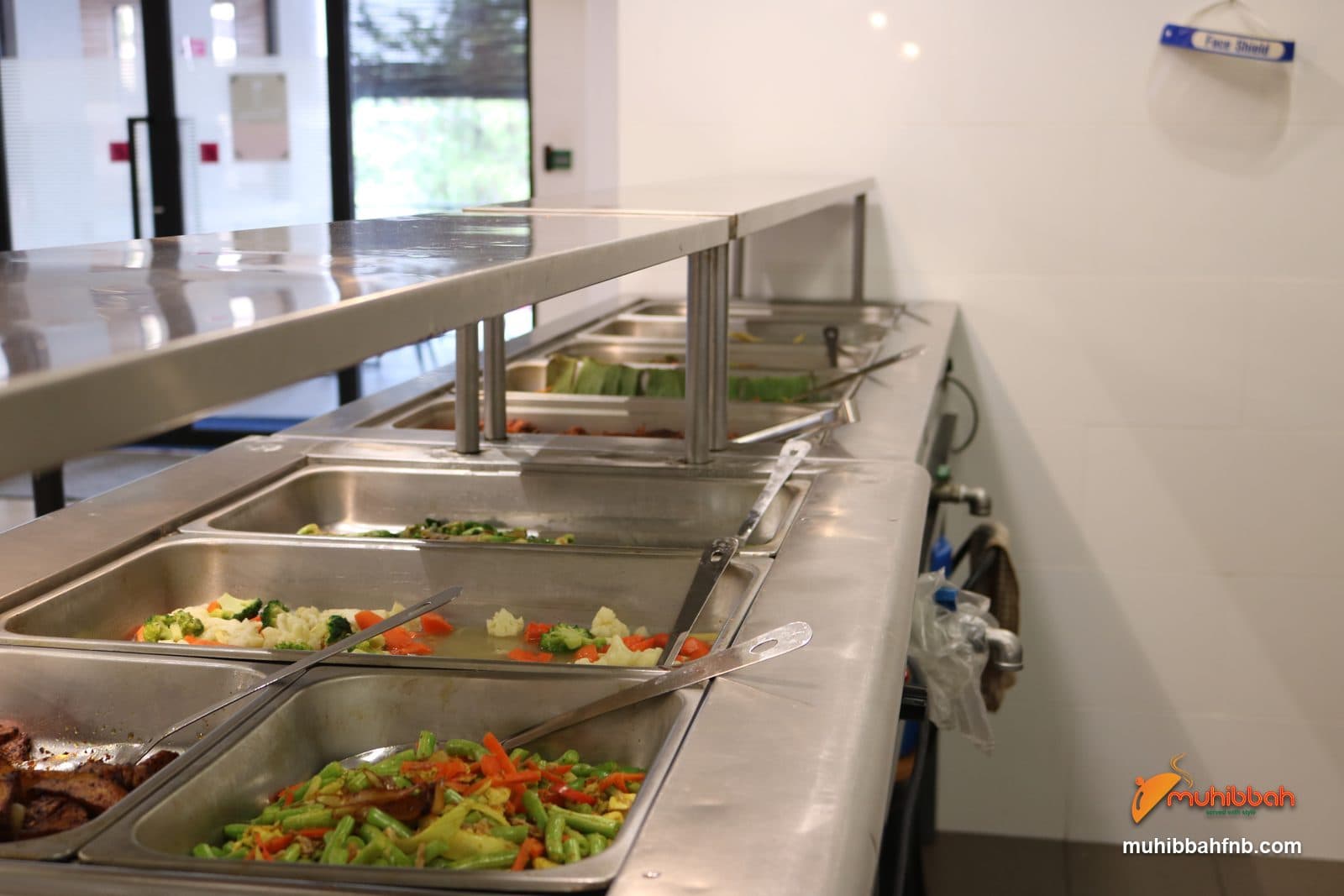
Our entire operational model is built for daily service. Menu design, staffing rotation, procurement volumes, kitchen layouts: everything is optimised for feeding the same workforce hundreds of times a year, not one wedding reception.
-
Our kitchen staff are career cafeteria professionals. They are not event chefs temporarily assigned to a canteen. They know what a 2-shift factory workforce actually wants to eat on a Tuesday morning in month four of a contract.
-
Our senior team is in your cafeteria, not at a wedding reception. When your account manager can be reached during the weekend, it is because they are not working an event somewhere else.
-
Our compliance discipline is continuous. Halal documentation, HACCP logs, food handler certifications, pest control reports: these are maintained as a daily practice, not scrambled before a site visit.
-
Our menu design assumes longevity. We do not design a menu to impress on day one. We design it to stay interesting on day 90 and day 900.
Why This Matters to Your Operation
If you are evaluating food service partners for your corporate cafeteria, industrial canteen, hotel staff dining or daily office catering, the "we do everything" pitch should trigger a specific question:
"Who actually runs my account on a day-to-day basis?"
A specialist operator's answer is: "The same senior team that runs all our sites. Because that is all we do."
A generalist's answer is often less clear, because the senior team is somewhere else, running the next event.
The difference shows up in small, compounding ways:
- Menu fatigue. After six months, does the rotation still feel fresh? Specialists design for year-five, not month-one.
- Staffing continuity. When a kitchen team member leaves, how quickly are they replaced? Specialists have standing recruitment pipelines.
- Compliance readiness. When an auditor walks in unannounced, how quickly can paperwork be produced? Specialists keep it ready continuously.
- Cost predictability. Does the monthly bill actually stay fixed? Specialists have the procurement scale to absorb ingredient price swings.
- Management response time. When something goes wrong (a food quality issue, a supplier failure), how fast does senior attention arrive? Specialists do not have a wedding to attend.
The Honest Trade-Off
Our specialist focus does limit what we can do for you.
If you need wedding catering at your daughter's wedding, we will recommend another operator. If you want your annual company dinner catered by a different team than your daily cafeteria, we will not be offended.
But if you want someone who lives and breathes corporate cafeterias, industrial canteens and daily staff meals, and who treats this as their craft rather than a sideline, we are built for that work.
What We Actually Do
For clarity, our complete scope of service:
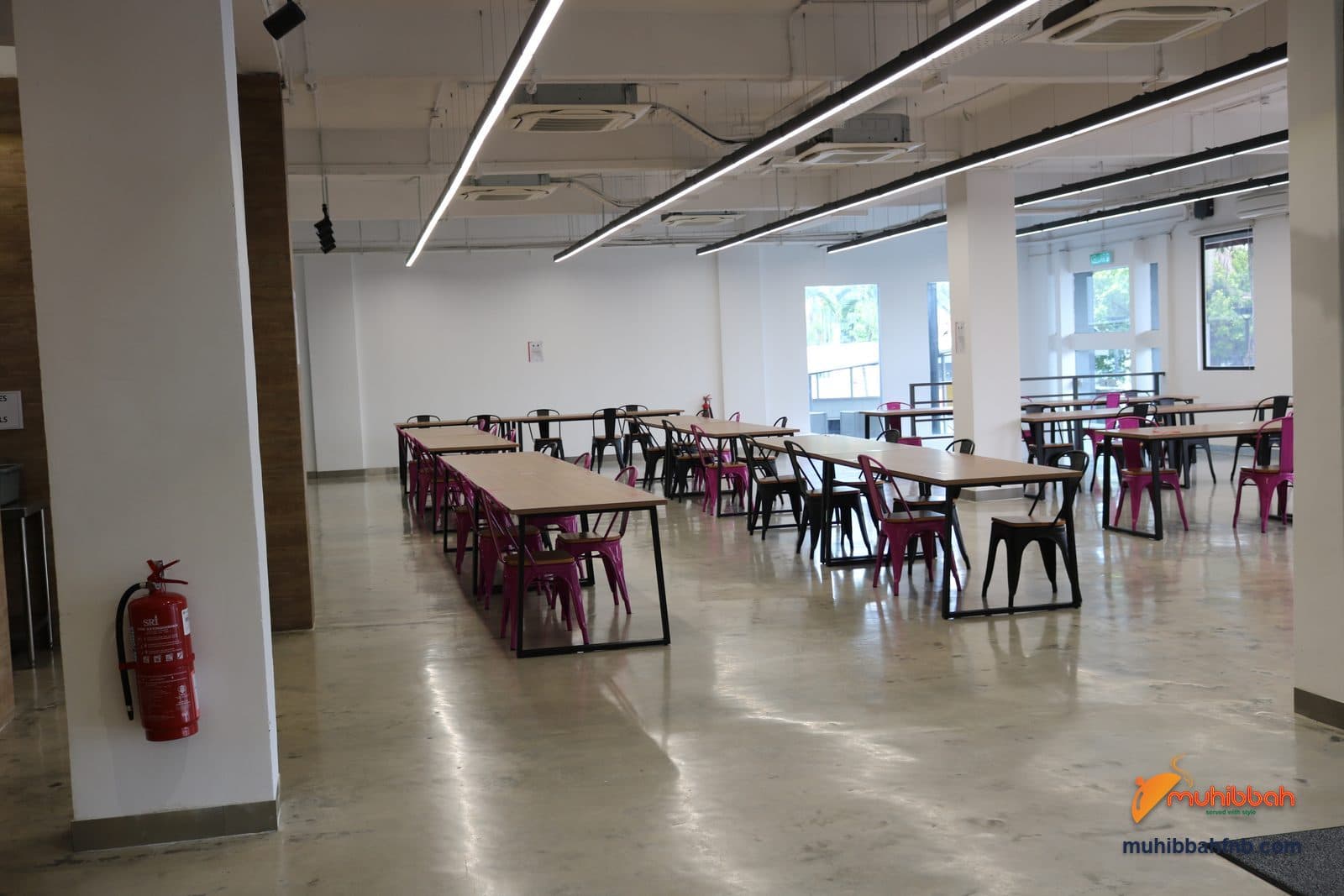
- Corporate Cafeteria Management: Fully-managed staff dining for corporate offices
- Industrial Canteen Operations: Multi-shift feeding for factories and manufacturing plants
- Central Kitchen Supply: Centralised production for multi-site corporate operations
- Hospitality Staff Dining: Dedicated staff cafeterias for hotels, resorts and theme parks
- Corporate Daily Catering: Daily lunch and tea break delivery for offices
- Coffee Bar & Pantry Services: Managed coffee bars and office pantry services
- Training, Meeting & Corporate Event Catering: Halal buffets and set meals for meetings, trainings, town halls and company functions, for business clients whether or not we run their cafeteria
That is the entire list. There are no wedding packages, birthday buffets or personal event services. There never have been. There never will be.
The Paradox of Focus
In most industries, specialists outperform generalists, not because they work harder, but because they accumulate depth faster. A surgeon who only operates on hearts sees more heart cases in a year than a general surgeon sees in five. That compounding experience produces better outcomes.
Food service is no different.
Corporate food operations have specific patterns (menu fatigue cycles, shift pattern challenges, compliance audit requirements, cost control dynamics, staff demographic preferences) that only reveal themselves after years of operating the same kind of engagement. A specialist accumulates those lessons at a rate a generalist cannot match.
This is why three of our client sites have run continuously for more than seven years. Not because we are cheap. Because we know the work.
Choosing a Food Service Partner
If you are currently evaluating operators for your cafeteria, canteen or daily catering requirements, a few questions cut through the pitch noise:
- What percentage of your business is daily corporate operations vs one-off events? If less than 80% is daily corporate, you are hiring an event caterer who also runs cafeterias.
- Who is my account manager's next most demanding client? If that answer involves weddings or consumer events, your account is competing for attention.
- How long have your longest-running client relationships lasted? Short tenures suggest operational or service issues. Multi-year tenures indicate consistency.
- Will your senior team be on my site, or at events? Ask directly. The answer reveals the business model.
- What do you specifically not do? A specialist will answer clearly. A generalist will claim to do everything, which is the tell.
Conclusion
Our refusal to do weddings, birthdays and private social events is not a gap in our service offering. It is the defining choice that shapes everything we do.
It means our senior team is at your site, not at a wedding reception. It means our kitchen staff are career cafeteria professionals, not event chefs on rotation. It means our menu design assumes year-five, not day-one. And it means when you need attention on your operation, nobody is pulling our focus in another direction.
If that is the partner you are looking for, contact us or request a proposal. If you need a wedding caterer, we will happily recommend one.